Free 10 ml BAC water at $75, 2 free at $150 • 10% off when you pay with crypto!

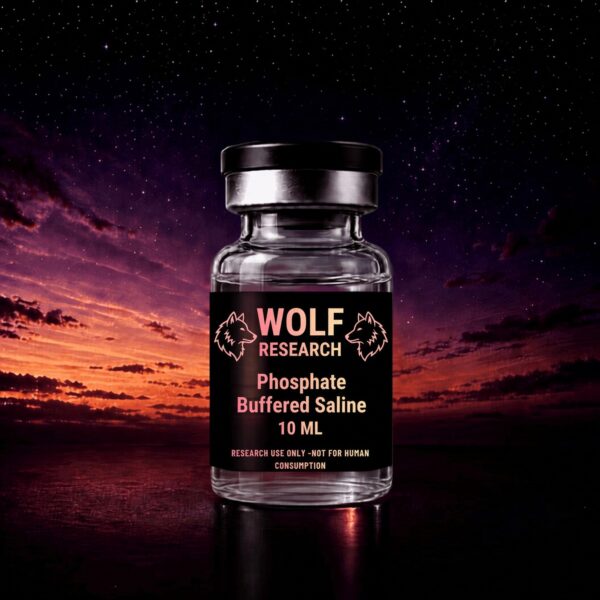
PBS Solution 10 ML
$9.99
Quick Overview: In short, PBS is essentially a buffered version of sterile saline solution. Sterile PBS controls pH and tonicity when working with acidic compounds like Glutathione and NAD+. Saline is simpler and cheaper but lacks the pH control that makes PBS the default lab buffer for most biological applications.
NOTE: This content is intended for educational purposes only and does not constitute medical advice, any diagnosis, or any treatment. This is strictly a research use only compound and not approved by regulatory agencies for human or veterinary therapeutic use or application.
In stock
| Title | Range | Discount |
|---|---|---|
| Quantity tiers | 2 | 5% |
| Quantity tiers | 3 | 7.5% |
| Quantity tiers | 4 | 10% |
| Quantity tiers | 5 + | 12.5% |
Extra Features
- 3rd-Party Lab Tested
- Encrypted Checkout (SSL)
Scientific Overview:
Phosphate-Buffered Saline (PBS) is an isotonic buffer solution (typically pH ~7.4) widely used in biological research for washing cells, diluting reagents, and maintaining physiological conditions. It is a water-based salt solution, and the standard formulation is well-established.
Why buffering matters:
- Cells, enzymes, and many proteins are sensitive to even modest pH shifts. Cellular metabolism, CO₂ from the air, or added reagents can acidify an unbuffered solution.
- PBS’s phosphate buffer (mainly the H₂PO₄⁻/HPO₄²⁻ pair) actively resists these changes and keeps the solution near the physiological pH of ~7.4.
- Plain saline is isotonic (same osmotic pressure as cells, so cells don’t swell or shrink), but it has no capacity to control pH. Its starting pH is often somewhat acidic and can move further during use.
NOTE: This content is intended for educational purposes only and does not constitute medical advice, any diagnosis, or any treatment. This is strictly a research use only compound and not approved by regulatory agencies for human or veterinary therapeutic use or application.
| Weight | 6 oz |
|---|---|
| Dimensions | 6 × 3 × 1 in |
You may also like…
Bacteriostatic Water 10 ML
$13.50 0.00022
 0.00770
 13.50000
In stock
Related products
PT-141 10mg
$29.99 0.00048 0.01711 29.99000In stock
Acetic Acid Water 10ml
$13.50 0.00022 0.00770 13.50000In stock
Lemon Bottle 10ml
$35.00 0.00056 0.01997 35.00000In stock
Sterile Vials 3ml – 10 pack
$19.99 0.00032 0.01141 19.99000In stock