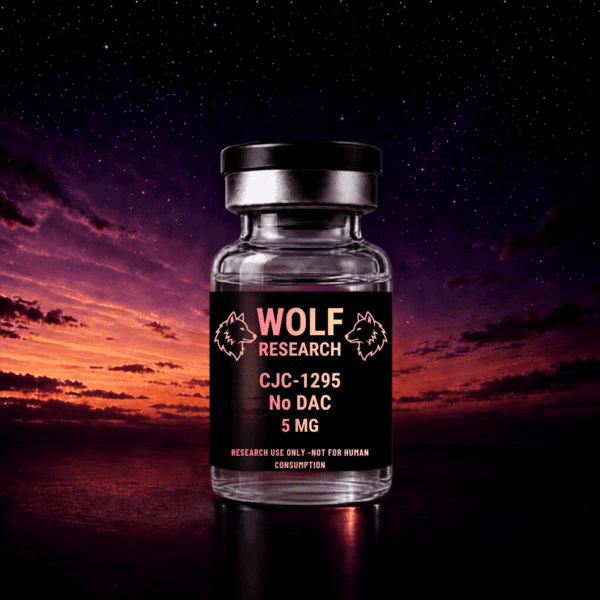
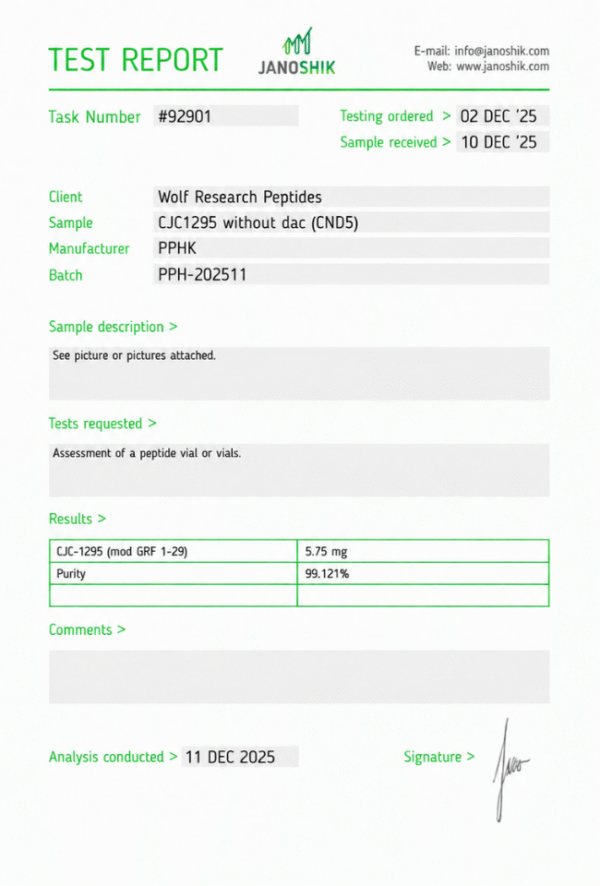
CJC-1295 NO DAC is a synthetic 29‑amino‑acid GHRH analog (also known as Modified GRF 1–29 or Mod GRF) studied for its effect on pulsatile growth hormone secretion from the pituitary gland. Unlike exogenous GH administration, CJC-1295 NO DAC is studied in relation to the physiologic GH feedback loop, GH and IGF‑1 levels, and hormonal rhythms. Research has examined body composition, recovery, sleep, and metabolic endpoints.
NOTE: This content is intended for educational purposes only and does not constitute medical advice, any diagnosis, or any treatment. This peptide is a research use only peptide and not approved by regulatory agencies for human or veterinary therapeutic use or application.
CJC-1295 (no DAC), also called modified GRF (1-29), is a 29-amino-acid analog of growth hormone-releasing hormone. It has been studied in laboratory and animal models for binding at GHRH receptors and for pulsatile growth-hormone secretion. Without the Drug Affinity Complex (DAC), its reported half-life is short (about 30 minutes), which is why researchers use it when they want a pulse-like pattern rather than a long-acting signal.
Endocrine Signaling and Pituitary Axis Studies:
Research in rodent and in-vitro models has examined growth-hormone secretion after CJC-1295 (no DAC), including whether ACTH, prolactin, and TSH levels change in those models. It is used to study the GH/IGF-1 axis and hypothalamic-pituitary feedback in experimental systems.
Pharmacokinetics and GH Pulse Frequency:
The short duration of action makes this analog useful for studies of natural growth-hormone pulse frequency. Longer-acting analogs may alter those rhythms in experimental models. Cell-line and animal studies have used CJC-1295 (no DAC) to follow growth-hormone and downstream IGF-1 readouts.
Metabolic and Cell-Signaling Models:
In preclinical research, growth-hormone pulses are studied for their effects on cellular processes such as glucose regulation, protein synthesis, and mitochondrial function. This material is used in laboratory models of those pathways. It is not a treatment and is supplied for laboratory research only.
NOTE: This content is intended for educational purposes only and does not constitute medical advice, any diagnosis, or any treatment. This peptide is a research use only peptide and not approved by regulatory agencies for human or veterinary therapeutic use or application.

 0.00064
 0.02285
 39.99000